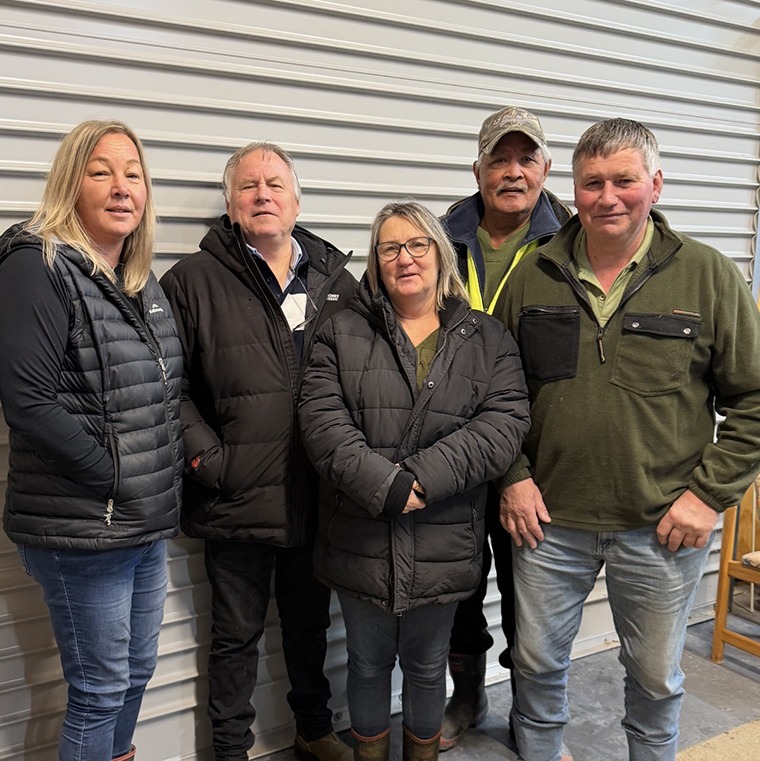
The last few months saw unprecedented weather events across the region, severally impacting our town, coastal and rural communities. Key corridors, roads and bridges closed multiple times and, in some cases, completely locked off communities for days. But we are a resilient bunch, and that number 8 wire and “there’s always a way” attitude came through strongly.
Read the following reports from some of our coastal and rural communities.
Lake Ferry
By Sharon Durrant, Lake Ferry Resident and Head Lead, Lake Ferry Emergency Response Team
Our community fared well considering the difficult circumstances. Our biggest challenge was isolation caused by the Tūranganui river bridge and road closures making reliable communication, coordinating food, medical supplies and welfare support difficult for people unable to get out or in.
As always, the strength of our community came from people looking out for one another. Neighbours checked on neighbours, particularly kaumātua, those living alone and anyone with medical or mobility needs. Food and medical supplies were coordinated and delivered where required, and people came together to share information, offer practical help and ensure no one was forgotten.
One of the greatest ongoing concerns for us and South Wairarapa is the age and condition of our bridges. These bridges are our lifelines. When they close, the impacts extend well beyond Lake Ferry and include local businesses, agriculture, employment, fishing, tourism and the wider community.
During the recent closure, some farmers had to travel via Longbush simply to reach the other side of the river to feed their stock. These lengthy detours create additional fuel and labour costs, place pressure on farming operations and can significantly increase the time required to carry out essential work.
The closures also prevented people reaching their workplaces and children to school. Customers couldn’t access local businesses, interruptions to the supply chain, deliveries and tourism bookings being cancelled. The economic and social impact of repeated isolation is huge; lost work, wages and business income, unexpected travel and fuel costs, disruption to farming, fishing and tourism operations.
I want to give a big shout out to the dedicated hero’s during this time, working in extremely difficult conditions to keep our communities connected. The Transpower linesmen, who connected a temporary power cable getting power back on right out to the end of Cape Palliser Road. And the roading crews for their never-ending work, repairs and maintenance on our bridge and surrounding roads.
Thank you also to the local farmers who allowed access through their properties enabling us to respond quickly to a medical event and coordinate essential food and medical drop-offs.
A huge thank you must go to the Pirinoa community, whose volunteers gave their time to collect and deliver essential goods to us. Their support demonstrated how closely connected our wider rural and coastal communities have become.
Last but not least, a very special thank you to our wonderful Kitchen Fairies, who kept tummies warm and full in some very cold and unpleasant circumstances. A warm meal can make an enormous difference when people are tired, worried and dealing with isolation.
How we have future proofed
Since the first weather event in February, we have been able to fine-tune the roles within our Emergency Response Team. Each event has helped us identify blind spots, highlight new needs and improve how we respond.
Lake Ferry and the surrounding settlements such as Mangatoetoe, Ngawi, Whatarangi, Te kopi and Whangamoana have been divided into smaller zones, with a representative covering each. This gives clearer understanding of who lives in each zone, who may require additional support and who can help with resources, equipment and communication. Stronger relationships and lines of communication are more robust and it’s a relief to know we can rely on one another.
Due to the repeated weather events and isolation, we have seen significant improvement in household preparedness. More residents are keeping essential food, water, medication and other supplies on hand in case access is cut off.
Yes, the repeated weather events tested our community, but they have also shown us how capable, generous and connected our people are. Every event taught us something new and to become better prepared for the next one. However, community resilience cannot replace the need for safe, reliable roads and bridges that protect the social and economic wellbeing of South Wairarapa.
Sharon is keen to gather more information from residents, workers, farmers and business owners on how they were affected to better understand the true cost of bridge and road closures to advocate for reliable and resilient infrastructure for the Lower Valley and coastal communities. Contact Sharon on sharonlockups@gmail.com to contribute.
Te Kōpi, Whātārangi, Ngāwī and Mangatōetoe
These hardy communities suffered the worst with the recent weather events in not only Tūranganui and other bridges being washout or closed, but also from torrential rain triggering massive slips and washouts along Cape Palliser Road cutting off vital access. The small community of Whatarangi was hardest hit, enduring over 200mm of rain in a single night. Mudslides tore through local properties and washing out roads rendering the route entirely impassable. The tight-knit fishing community of Ngāwī found themselves locked in once again. True to their resilient nature, the locals pretty much took it in their stride, sharing generators when the power was out for long periods, quickly checking on neighbours and being a community of passionate fisher’s and hunter’s fridges and freezers were well stocked.
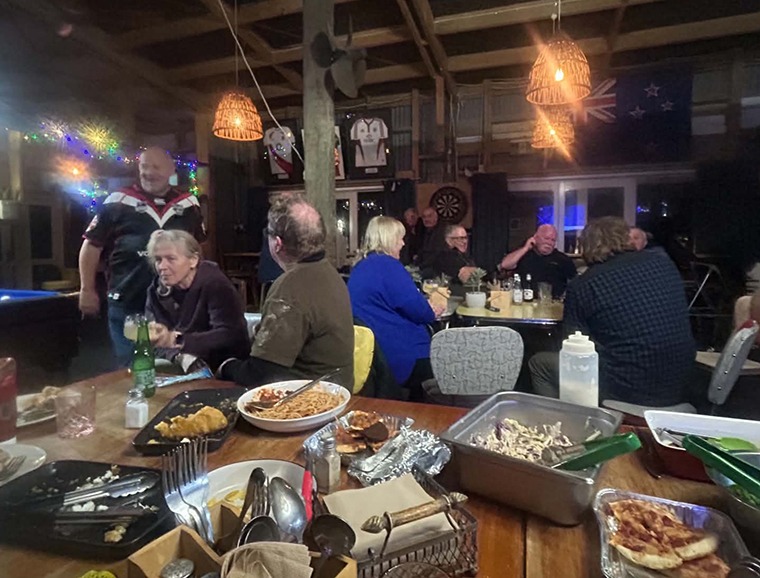
The locals banded together, and with luck two local road contractors were their side of the damage and quickly jumped into action with their heavy machinery to clear the mountains of debris restoring road access between the communities. To celebrate the cleared road and to reconnect the communities, Waimeha Camping Village owner John Priest hosted a Sunday potluck dinner where locals came together to enjoy food, great company and keep spirits high despite the challenging week.
Pīrona and Western Lake
By Dav and Fi, Owners Pirinoa Store and Western Lake residents
Western lake wasn’t too badly affected; it was the only way to get in and out due to the spillway and lower valley bridge being closed.
We live in Western Lake, and we did our best to get to the store as we service a wide area and knew that many of our customers would be locked in and need supplies. Our normal 20-minute drive to and from the store took two hours door to door, having to go via Featherston, Carterton, Longbush then back through Martinborough due to the closed bridges. Our regular suppliers couldn’t deliver to the store as it was too far to get via the detours. People phoned in supply requests which we boxed up and made deliveries where we could and managed to serve the community with the help of people chipping in with their 4WDs, quads and side by sides. Neighbours checked in on each other, having a coffee together and helping each other as much as possible.
Dave had to stay over at the shop for a night to make sure he could open in the morning and not risk not getting back, the community was very happy with him for that.
Tōra
By Jenny Boyne, Tōra local and chair of the newly formed Rural and Coastal Advisory Group
The weather has certainly been wet and wild for a number of our residents and farmers in our locality, and fortunately stock losses have been small compared to our neighbours in the South and lowland areas around Martinborough.
Numerous slips, missing floodgates and debris on fences not already flattened from the beginning to the end of the White Rock Road.
All roads were closed for a few days during the two main weather events, and while the roading contractors have done a fantastic job clearing the significant slips, there are still a number of slips and washouts to be sorted and more movement on the roading network makes for driving at night an adventure especially passing through the gravel walls by the old Tūtūrumuri School.
Those who live further along the Coast also have had to contend with high seas pushing debris up and over the road, though this is minor in comparison but yet another obstacle to negotiate when heading into town for groceries.
Fortunately, our RD2 posties, Simon and Lisa worked on Matariki to clear the back log of mail and parcels, delivering us our supplies from P and K in time for the long weekend.
Our annual Matariki event at the South Tora Reserve was somewhat subdued this year, road closures, slips and the cold wet weather kept a number from attending. The event was relocated to the Tora woolshed where Brian Walters and his son Jasper lead the karakia.
The Community is very grateful for all the support they have received from farming businesses and friends and family during this time.
Plans are underway for a gathering at the Hall for the Community with assistance from the Rural Support Trust.
Ruakokoputuna
By Richard Le Mare
We coped, but as Lennon and McCarney said – “WE GOT BY WITH A LITTLE HELP FROM OUR FRIENDS”
And again, Martinborough became an island with all access, except via Longbush, to the town blocked by closed bridges.
With these reoccurring battering’s from the recent weather events several rural communities have and are developing their own emergency community hubs to make us all a bit more resilient and safer.
I’ve lived here about 6 years and whilst we’ve seen significant wind and rain, this is the first time we’ve seen so much weather-related destruction, some of our friends have said that it is quite unusual.
Our emergency hub found a vast array of resources in our community; we saw slips being cleared within hours by a local with a digger. We saw our local ‘Community Facebook page’ becoming an integral part of communicating about everything from whether the ford is passable to slips on the road.
The greatest thing was to see how supportive and caring everyone was. As well as being kept up to date on our FB page, there were the kindest offers of meals and accommodation, the loan of generators and a general message to anyone to call out if they needed help or reassurance, it was so nice to see such a large number of people oozing with kindness.
The Rescue: A Family Affair
By Pauline McLeod
30 June 1947
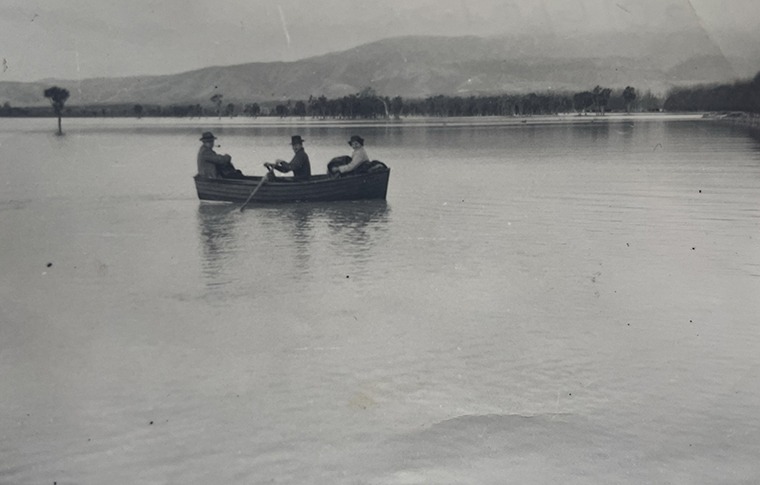
On 29 June 1947 heavy rain started falling in South Wairarapa, causing record flooding when the Ruamahanga and Tauherenikau rivers overflowed on to thousands of hectares of farming land. The outlet at Lake Ferry was blocked because of the strong southerlies blowing at the time, according to “The Post” Special Reporter at that time.
There were huge stock losses, and several residents were trapped in the Kumenga area – the Sanson family, Sandy, Gwen and their 4-month-old daughter were marooned at Te Hopai. Gwen was a cousin of my father’s, so Dad (Ian McHugh) hatched a plan to get her and baby Pauline away from their farm cottage, now surrounded by rising water. Dad and Gwen’s mothers were sisters – Jessie and Alice McMaster, from Matawhero, Pirinoa.
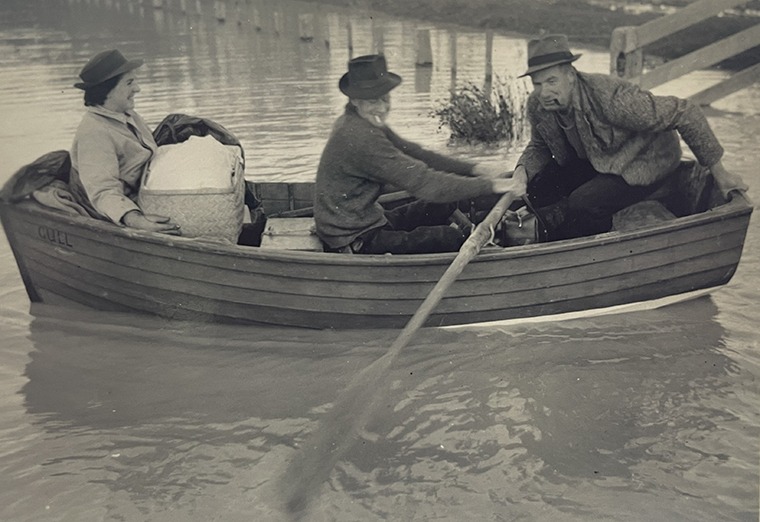
On 30th June, Dad with brother-in-law Harry Spiers loaded the Gull, a clinker-built boat, on to his truck then drove from Dyerville to Tuhitarata. They launched it and rowed downstream to the sandhill where the passengers waited, baby in a Moses basket.
It was a massive risk to take – unlike the father I knew. A King’s Scout, at 14 the youngest in a contingent of 48 New Zealand Scouts who went to England in 1929 for the 3rd World Jamboree. How could he ‘Be Prepared’ if a huge log collided with the boat?
No lifejackets were worn or were visible in the boat. The photos show them in shallow water, but they had to cross the riverbed against the current further on. They expected to stay dry. The photos show Dad with a roll-your-own stuck to his lips, Harry with his pipe dangling from his mouth, jauntily angled hats on, and Gwen all smiles as they sailed away. They then drove back to our family farm “Waiata” where Gwen and baby stayed until it was safe to return.
Desperate farmers took surviving stock to neighbours on higher land. Harry Martin of Otaraia Station, north of Tuhitarata, grazed stock from Te Hopai at that time, as his son John also did during later floods. Another Cousin Keith McMaster buried dead stock with his Caterpillar D4 – his childhood home was next door at Tuhitarata. He also kept the lake opened at the time.
This flood led to the establishment of the Catchment Board (later replaced by the Greater Wellington Regional Council). Changes followed including straightening the river from the Tuhitarata Bridge and installing barrage gates to manage water levels between Lake Wairarapa, the Ruamahanga river and Lake Onoke, ideally to prevent huge floods recurring.
It’s obvious from the three recent Lower Valley floods already this year that we still have work to do, call it Plan B.
Serious issues arise – what is the timeframe, and where is the willpower, planning and funding coming from? And who will be in charge – local bodies or central government?
Or will Mother Nature have the final word – again?