Water is the lifeblood that connects places and people.
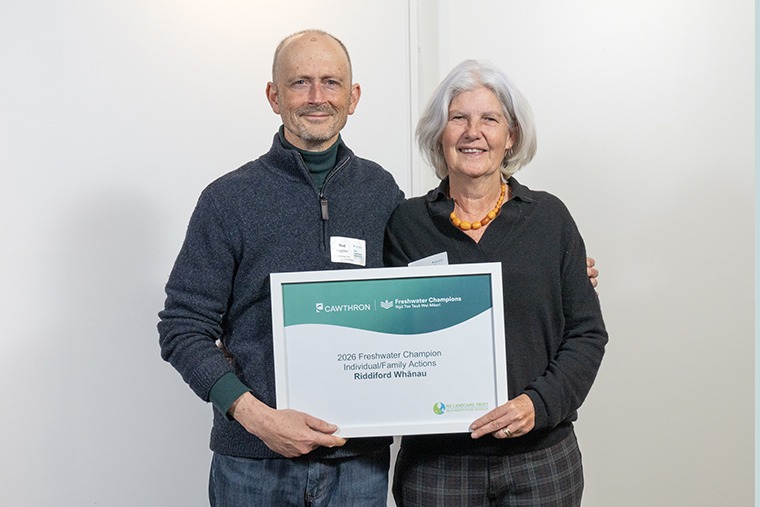
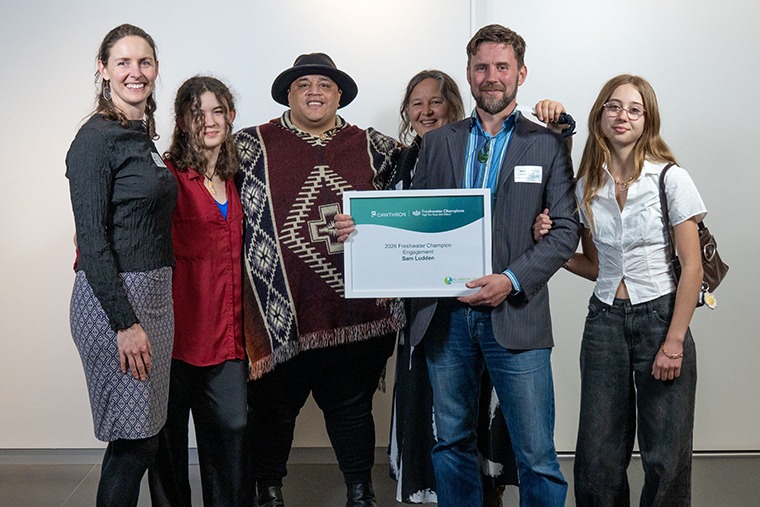
Through our waterways, our whānau has connected deeply not only to our home at Ruamāhanga Farm but also to many incredible people across the Wairarapa and now throughout Aotearoa New Zealand. At the end of August, we experienced a milestone when our close friend and collaborator, Sam Ludden, also from the Wairarapa, alongside our immediate Riddiford whānau, were honoured with national Freshwater Champion Awards by the Nelson-based Cawthron Institute.
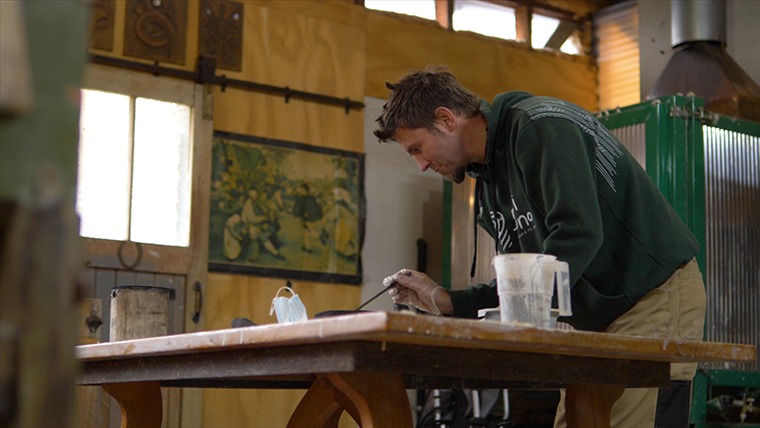
Sam, who serves as Hau Pou Kaitiaki (environmental officer) for Ngāti Kahungunu ki Wairarapa, was recognised for his tireless efforts across the region. His mahi includes supporting the Ahu Collective’s kaupapa Māori planting programme, the Mokomoko Project along the Waipoua River, and various Wairarapa Moana restoration initiatives. He uses art, storytelling, ceramics, and hands-on restoration activities to connect people with freshwater issues, while mentoring others and advocating for iwi perspectives.
Ruamāhanga Farm Foundation has had the pleasure of collaborating with Sam on our environmental education programme, Te Reo o te Wai.
Ruamāhanga Farm Foundation has had the pleasure of collaborating with Sam on our environmental education programme, Te Reo o te Wai. A highlight over the last three years has been welcoming tamariki from participating schools onto Hau Ariki Marae. Sam acts as kaikōrero during the pōwhiri, creating a meaningful space for the children to share poems and songs about their experiences in te taiao. This is followed by a clay and kōrero session where Sam guides each class in making an ipu whenua — traditionally a vessel for the placenta. On this occasion, the small clay pots hold the children’s hopes and dreams for the future of Wairarapa Moana.
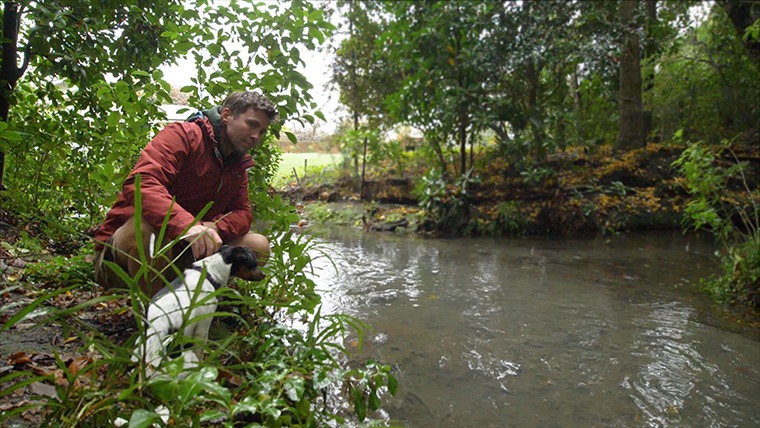
When presenting our whānau with our award, the judges noted the intergenerational and community oriented way my sisters Liz and Lucy, my mother Yvonne, my husband Rod Sugden, and I work. They particularly appreciated how we place children and young people at the heart of our efforts to restore wetlands and native bush remnants along the Ruamāhanga River.
Many attendees at the ceremony commented on the power of young voices woven through our mahi. In his acceptance speech, Rod shared how he is inspired by the children’s words about water, quoting an eight year old student from Kahutara School: “I like the cold sparkling awa because it is so mysterious… it is as bright as heaven.”
Our farm has been cared for by our family since 1907. Establishing the Ruamāhanga Farm Foundation (RFF) four years ago has given us, as tangata tiriti, a fresh foundation to act as stewards of the whenua and its waterways. This stewardship now extends beyond our farm and into neighbouring properties within the recently formed Waihinga Catchment Group. To be acknowledged in the family actions category at this early stage of our journey means a great deal to us. We owe a huge thank you to Maddy Glover from Greater Wellington Regional Council for nominating us, and to everyone who endorsed our application.
The awards were presented at the Freshwater Champions Forum, an event featuring panel discussions that focused less on dry science and more on the power of people coming together. A recurring theme was the paradox of conservation: to move quickly, we must first learn to move slowly. We have to make time to listen and cultivate spaces where shared understanding can grow.
Panellist Te Ao Te Rangi Apaapa described how his work on the Taiea te Taiao ecological corridor project succeeded by weaving traditional Māori knowledge with the lived experience of local farmers. Naomi Aporo, who hails from the Wairarapa, spoke about the need for self-reflection rather than pointing fingers. Again and again, speakers noted that successful action often begins with an almost imperceptible whisper rather than a roar.
I returned home uplifted and grateful for the collaborative spirit we are fortunate to experience here in the Wairarapa. Over recent months, it is not only our collaboration with the Martinborough Music Festival that makes our mahi sing, but also the involvement of more than ten local environmental and arts organisations, schools, fellow farmers, and independent practitioners. It is a reminder of the creative and diverse ways that water connects us all.