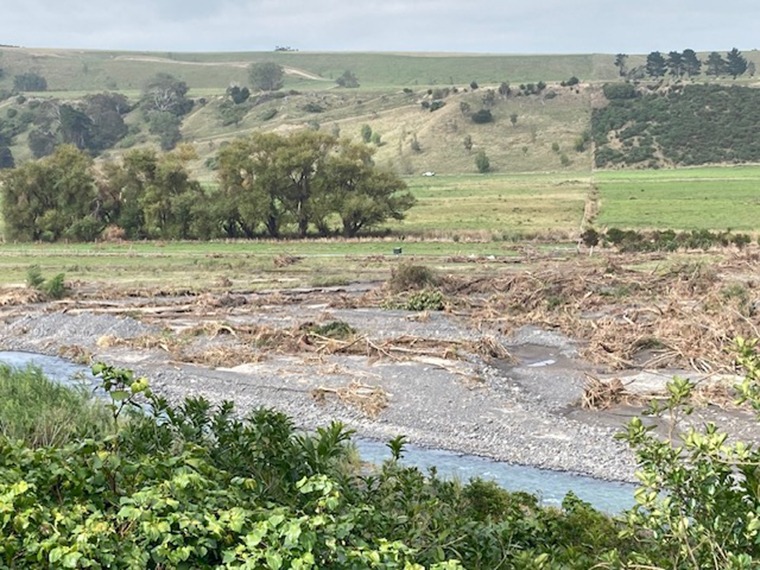
Here we go again: floods, rivers, roads and bridges. I’m reasonably qualified to comment, as our farm has been hit by all the above. Dealing with the aftermath – ourselves, with local groups, the regional and district councils, and contractors – is all consuming. Cleaning up, repairing damage, and trying to prevent a repeat is now the priority for our property, our community and the environment.
The Taonui and Turanganui river catchments in the Aorangi ranges have had two huge dumps of rain this year, each around 500mm. The February flood caused the most havoc; the other two were cleaner but still breached riverbanks and damaged roads and bridges. I haven’t seen any official cost estimates, but for these two rivers alone it will undoubtedly be in the millions. On our property, the land lost, productivity impacts, refencing, culverts, irrigation repairs, debris removal and regrassing will exceed $500,000. On top of that, we’re building internal stop banks and groynes to protect our most productive land.
The February flood caused the most havoc; the other two were cleaner but still breached riverbanks and damaged roads and bridges.
These were abnormal weather events, but the damage has been worsened by twenty years of poor river management by Greater Wellington Regional Council. They have not listened to locals or knowledgeable contractors about what is happening and how to manage rivers practically. District councils are furious too, as bridges and roads are being taken out through inadequate river maintenance. Our Whakatomotomo Road is down to one lane with weight restrictions for months.
Regional councils used to be Catchment Boards, focused on managing rivers and catchments. Now they are four times bigger, trying to manage everything and please everyone, with multiple layers of bureaucracy. Add another layer of wellmeaning but impractical advisors, plus organisations like Fish & Game, environmental groups and iwi – each with their own priorities. Yes, environmental standards have improved, but too often nothing gets done at ground level. And by the time everyone is satisfied, there’s little money left for real work.
To their credit, river managers are now tackling immediate problems: rechannelling sections of river, building “soft” groynes, and planting willow to stabilise berms. But permanent materials aren’t permitted, which is impractical. They’re also extracting very little metal from the river, so banks and groynes are built with riverrun. I’ve given a local roading contractor access to stockpile riverrun, but GWRC doesn’t seem interested in extracting it for commercial recovery, so most of it stays in the riverbed. The last two high rivers have already removed 20–30% of the new structures and plantings – a waste of effort and money.
However, we now have a local action group of residents, contractors, and both councils working together. Hopefully this leads to better outcomes.
It’s not all doom and gloom. These events have brought our community together, and outside assistance – contractors, Rural Support (Sarah Donaldson), and Rapid Relief Packages through the Exclusive Brethren organisation – has been generous. RRP is even organising a free fencing material pickup day at Martinborough Transport, Lake Ferry Road, on Thursday 13 August, 11am–1pm.
In the meantime, keep well – the sun will rise again tomorrow.