As the crisp autumn air settles over the Wairarapa, May is a month of transition. While the warmth of summer feels like a distant memory, the cooler, shorter days offer the perfect opportunity to shift your focus toward long-term productivity.
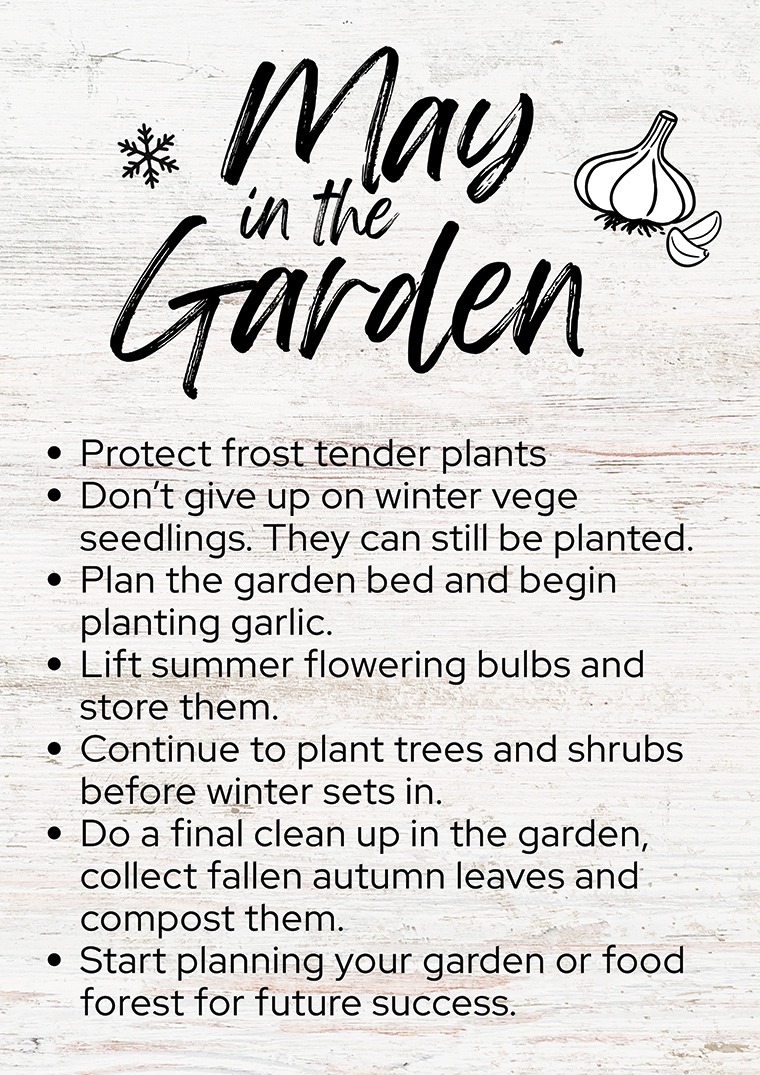
To ensure your edible garden thrives through the winter and prepares for a bountiful spring, you should begin by tidying the space and applying a generous layer of mulch. Clear away dead summer vegetable debris, taking care to bin any diseased material rather than composting it, then protect the roots of your remaining crops with pea straw or well-rotted compost to insulate them against the incoming frosts.
It is also the time to transition to your winter crops. Sow broad beans, kale, spinach, and winter lettuce now to make the most of the remaining warmth in the soil. If you have garlic cloves ready, May is the traditional time to plant them in our region, which allows them to establish strong root systems before the soil cools significantly. Finally, if you have empty garden beds, do not leave them bare. Sow a green manure crop like mustard or lupin; this will prevent nutrient leaching from winter rains and actively improve your soil structure for the busy spring planting season ahead.
As you work through these jobs, you might start seeing your garden as more than just a list of seasonal chores—it’s actually the heart of your home’s food supply. Since we’re heading into winter, it’s the perfect time to rethink your backyard and turn it into a source of fresh, local produce all year round. By moving away from planting in temporary, single-season rows and instead trying a permanent, multi-layered approach, you can build a garden that works with nature to provide a steady harvest for your kitchen. This is the essence of a food forest—often called “forest gardening” – which mimics the structure of a natural woodland but replaces native species with productive, edible alternatives.
If you are looking to experiment with a food forest, begin small. Identify a corner of your property and plant one or two fruit trees, under-planting them with perennial herbs like rosemary or thyme. By layering your plantings, you create a space that requires less digging, less weeding, and less watering over time. You are not just gardening for the season; you are building an edible legacy that will provide for your household for years to come. As the leaves turn and the garden slows, use this time to dream big. Whether you’re planting your first row of garlic or sketching out a plan for a diverse food forest, May is the time to sow the seeds of future abundance.