An iwi led exhibition, entitled Tino Rangitānetanga is on display in the Main Gallery at Aratoi until July.
This show is an expression of identity, belonging and continuity. Presented by Rangitāne o Wairarapa, this exhibition honours their whakapapa, their whenua, and the enduring presence of their people across generations.
Through ancestral narratives, pre-colonial landscape mapping, and treasured taonga, the exhibition offers space to reflect on who Rangitāne are and where they come from. The story of Kurahaupō waka anchors the journey, connecting past to present and contemporary Māori artistry. Taonga drawn from national collections sit alongside works held within Aratoi and their own whānau, creating a quiet weaving of memory, care and connection.
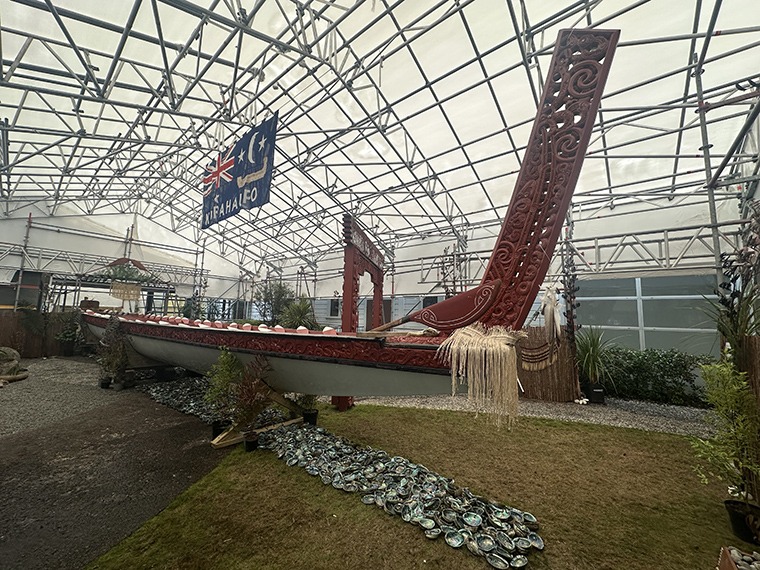
Te Waka Wairua o Kurahaupō is in the Aratoi courtyard for the duration of the exhibition.
The Kurahaupō canoe was one of the original migration canoes from Hawaiki in East Polynesia to Aotearoa. It completed its journey at Nukutaurua, on the Māhia Pensinula, where it is preserved as a reef.
Whātonga was the commander of the Kurahaupō canoe and his grandson was Rangitāne, the eponymous ancester of the Rangitāne tribe. The Rangitāne tribe occupied the Wairarapa and neighbouring districts and came to share this area with closely related people from Ngāti Kahungunu who migrated to Wairarapa several generations afterwards.
As part of the 1990 Waitangi celebrations, a new waka was constructed and named Kurahaupō by the tribes who descended from the original canoe, including Rangitāne. It is this Kurahaupō canoe that is on display here.
Tino Rangitānetanga and Te Waka Wairua o Kurahaupō are on display at Aratoi until 19 July.