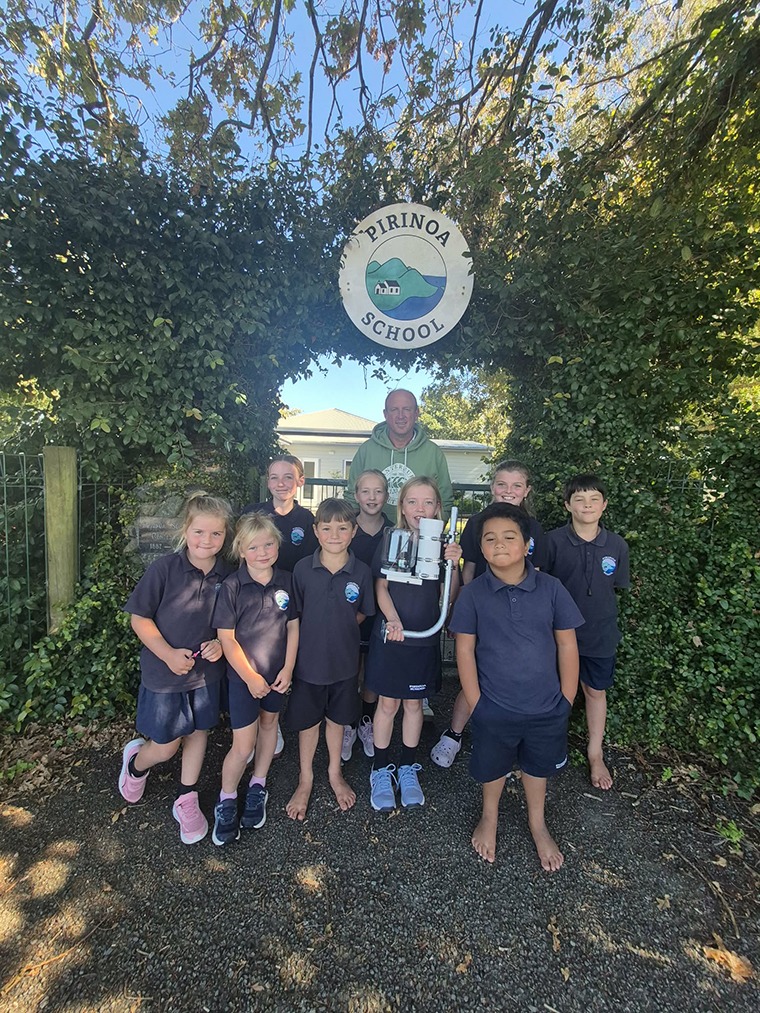
Hundreds of kids from eight regional schools are about to join a Wairarapa Dark Sky Reserve network of night lighting measurement and associated science.
In a programme currently being launched across the region titled “Measuring the Night: Understanding Light Pollution in Our Community,” this hands-on STEM (Science, Technology, Engineering and Maths) project is to encourage curiosity about astronomy, data science, environmental stewardship and community well-being.
The project will install Sky Quality Meters (SQM) at the participating schools to measure sky brightness at night, with the first $840 meter and its attached solar power unit already in operation at the rural Opaki School, north of Masterton.
“Students will learn how to collect, record, and interpret data from the meters to understand the impact of light pollution on our environment, human health, and wildlife,” project coordinator Charlotte Harding told The Star.
Wairarapa Dark Sky Reserve is working to ensure the data is collected, collated, then loaded onto a map on its website to detail an extra range of dark sky readings across the region.
Two of the new units have been installed at Te Kopi and Waikuku Hut – both in the dark “core” of the region-wide reserve.
The school sites’ data will add to the group’s current light reading and recording programme – which in turn feeds into the world-wide Dark Sky International data collation from 250 dark sky places across the globe.
It will also be added to a database being developed by some of New Zealand’s 10 dark sky places, including Aoraki-McKenzie, Kaikoura and Akaroa. Another 17 areas, including Rekohu (Chathams), are working for formal international recognition as dark sky places.
Harding noted the schools project activities enables the students to have:
- an introduction to light pollution and the night sky; learn how the SQM works and what it measures;
- collect monthly readings; chart and analyse trends in the data; explore averages, plot graphs and explore both the new moon and the impact of weather as well as light variation throughout the night.
This activity will help highlight the importance of the dark sky, the impact of light, of weather and air pollution, and provide a basis for ideas to mitigate light pollution, she said.
“We are also exploring options for college-level students which will support learning development in maths, physics and statistics,” Harding added.
Teachers at each school will be provided with an instruction manual to help with data down-loading and interpreting what the light reading results show about the impact of changes in dark sky readings.
South Wairarapa schools involved are Pirinoa, Kahutara, Martinborough and Kurunui College.
Sponsorship for the SQM Unihedron light-reading units and solar panels has been provided to the project by Masterton and Carterton District Councils, WBS (Wairarapa Building Society) and Martinborough Community Board.