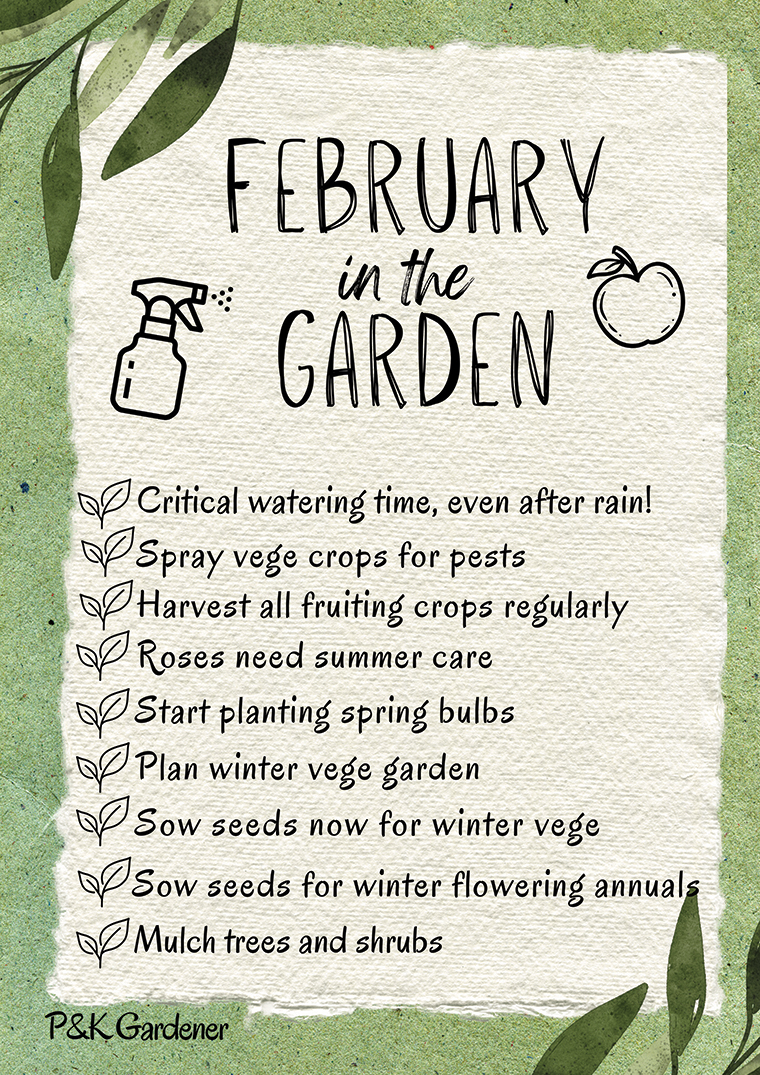
February in the Wairarapa is a month of beautiful extremes. While we bask in the height of the summer harvest, we also have to contend with the region’s signature dry winds and afternoon temperatures that frequently climb toward 30°C. For the local gardener, this month is a delicate balancing act of keeping current crops hydrated while beginning the subtle shift toward autumn and winter preparation.
This is the ultimate payoff month, with kitchens overflowing as the heat works its magic on tomatoes, peppers, and stone fruit. To keep your plants productive, harvest tomatoes and beans daily, and pick peaches or nectarines in the cool of the early morning for the best flavour.
To keep your plants productive, harvest tomatoes and beans daily, and pick peaches or nectarines in the cool of the early morning for the best flavour.
Given how quickly the Wairarapa sun can turn a tender zucchini into an overgrown marrow, a quick daily circuit of the patch is essential. Our beloved roses also require extra attention during these hot, dry weeks. Deadhead faded blooms regularly to encourage a final flush of flowers, and keep a sharp eye out for aphids or mites, which thrive in the heat. A simple blast of water from the hose or a spray of organic neem oil can manage most pests, while ensuring good airflow around your bushes will help prevent black spot. Proper rose care now ensures your garden stays vibrant even as the season begins to turn. Water management is your most important task, even as January has seen an atypical rainfall, the ground remains dry. A deep soak early in the morning, before the wind picks up and evaporation rates skyrocket, is much more effective than a light sprinkle. To protect your soil, apply a thick layer of pea straw or organic mulch. This is vital to prevent our heavy local soils from cracking and baking into a hard crust under the summer sun.
Toward the end of February, start sowing brassicas like broccoli and cauliflower so they can establish themselves before the first sharp autumn frosts. As you pull out finished crops like garlic or early potatoes, remember to replenish the earth with compost and sheep pellets, ensuring your soil remains healthy and ready for the next season of growth.