Astronomers call it the Billionaire Space Race, as tech billionaires plan the launch of tens of thousands of Low Earth Orbit satellites over coming decades which will vastly pollute the night sky.
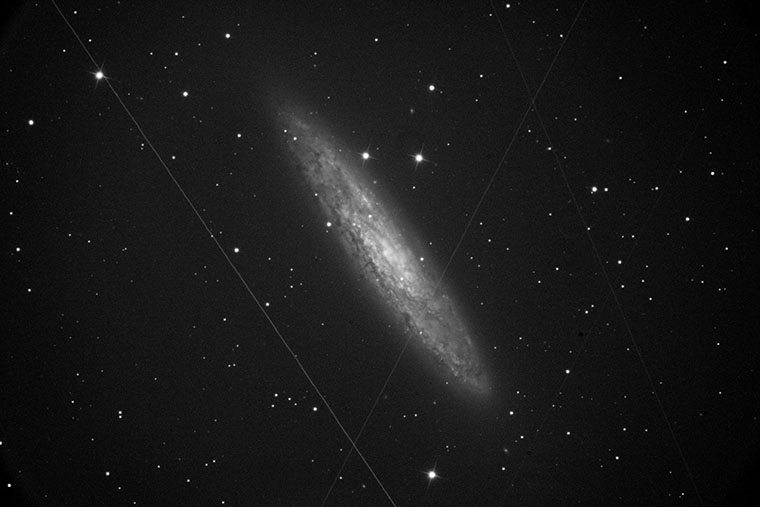
Already astronomers in South Wairarapa have regular but unplanned satellite track incursions into their viewing and imaging of the night sky.
Recent reports have revealed plans by satellite groups to have more than 100,000 low earth orbit satellites circling the globe by 2050.
Rapid proliferation of these so-called mega-constellations of space objects is considered a scourge of the dark sky by astronomers, photographers and environmentalists.
Yes, they provide global internet connectivity.
But they cause significant, rising light pollution which alters the appearance of the night sky, disrupts professional and amateur astronomy and introduces new, unregulated environmental issues to the upper atmosphere.
Samantha Lawler, astronomy professor at the University of Regina in Saskatchewan, Canada has several angles on this unregulated “space race.”
“Tens of thousands of artificial satellites (satcons) are rapidly being developed and launched. These satcons will have negative consequences for observational astronomy research and are poised to drastically interfere with naked-eye stargazing worldwide should mitigation efforts be unsuccessful,” she wrote in one academic paper in The Astronomical Journal.
Lawler has inspected and documented space junk falling in local farmland, junk weighing hundreds of kilos from a SpaceX Crew Cabin trunk in one case, in another a piece of a Starlink satellite in a lentil field in the same province.
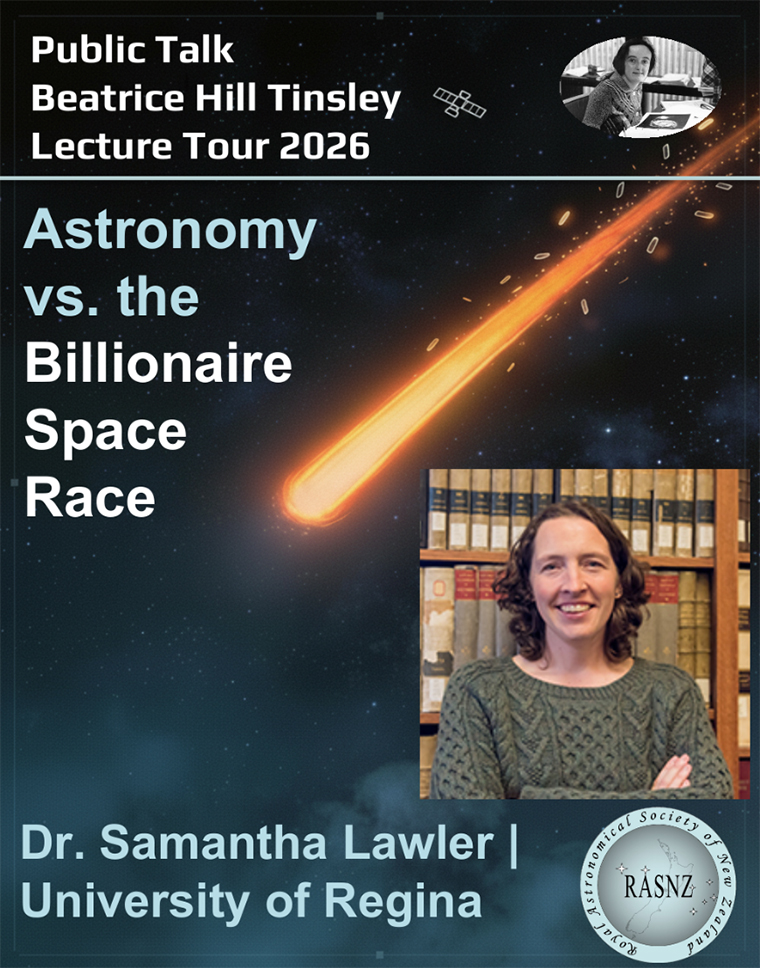
“Come learn why Saskatchewan is the best place in the world to find space debris, and what happens when you find space debris on your farm and silent SpaceX employees show up in a rented truck to be greeted by an astronomer and a dozen of Saskatchewan’s finest local journalists,” Lawler writes in an invitation to Wairarapa dark sky enthusiasts when she speaks in Martinborough Town Hall on February 12.
Meeting sponsor, the Royal Astronomical Society of New Zealand, adds: “In September 2025, one of the handful of Starlink satellites re-entering every week was witnessed burning up across the entire western half of Canada, with the re-entry ending over Saskatchewan. “
“The billionaire space race is well under way, and this has important implications for international law, the continued operation of satellites in Low Earth Orbit, atmospheric pollution, and the future of astronomy.”
An AI tool helped sum up the downside of the Billionaire Space Race.
1. Increased dark sky brightness: satellites have added a diffuse glow to the night sky, which is already 10 percent brighter than natural levels; wild west rules could see “extinction” of the dark sky.
2. Astronomy disruption: Satellites appear as moving streaks of light in long-exposure, deep-sky photographs, ruining data for scientists; interference with radio astronomy by Starlink “leaking” electromagnetic radiation and creating noise.
3. Impacts cultural heritage and nature: effects on night sky viewing and navigation, leaving future generations with a “sky of satellites” rather than stars; light pollution from above may affect nocturnal wildlife and its navigation by the stars.
4. Upper atmosphere pollution: Burn-ups in the upper atmosphere release metals like lithium and aluminum with unknown long-term effects; operators are using dark coatings for “dark sats” – measures insufficient to counteract the massive increase in the number of satellites.
New Zealand is not immune to any of this – even space junk. It sits next to a “space cemetery,” a Pacific Ocean zone where large space debris, like old satellites and space station parts, are intentionally de-orbited and sink. Space junk landings include Soviet-era “space balls” (titanium fuel tanks) falling on the South Island in 1972.
Diary Note: Thurs 12 Feb: Prof Samantha Lawler, Martinborough Town Hall – evening public lecture.