Atmospheric Rivers are long narrow plumes of water vapour carrying vast amounts of concentrated moisture from the tropics towards higher latitudes.
They can stretch for thousands of kilometres, bringing significant rainfall and flooding, especially when they make landfall and interact with mountainous terrain. On average there are only three to five atmospheric rivers present in each hemisphere, covering just 10 per cent of the globe’s mid-latitude circumference, but accounting for 90 per cent of moisture transport in the same region.
One of the results of a warmer climate is a wetter atmosphere. With more moisture in the atmosphere the frequency and magnitude of atmospheric rivers making landfall in New Zealand is expected to increase. The increase in extreme precipitation is not expected to occur equally throughout New Zealand. Motueka for example was hammered in late June, early July last year. Now Northland and the East Coast and Hawkes Bay have suffered.
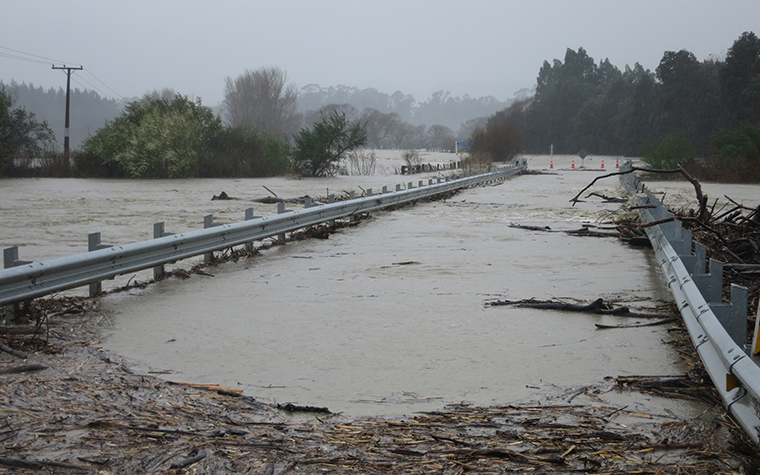
The impact of this weather phenomena is catastrophic with mudslides, widespread flooding, road closures, infrastructure damage, power outages and disruptions. People’s homes have been flooded or washed away. Rivers burst their banks shifting tons of soil and debris onto precious horticultural and farmland.
The clean-up, cost and repair of the infrastructure damage amounts to millions of dollars.
And that does not even account for the emotional and social cost.
How does Martinborough fare in these circumstances? The South Wairarapa is a flood plain. The Ruamahanga River, Waiohine, Wainagwa, Hungarua, and Tauherenikau, are all significant rivers which are prone to flooding. Floods of significance were 1980, 2004, and 2017.
Impacts for the Wairarapa are equally as dramatic. Roads in and out of the region become inaccessible.
Are we prepared for future deluges?
The Waihenga Bridge is the main access into Martinborough. During flooding it closes, cutting off the whole community. “The impact on Martinborough when the bridge closes is colossal”, says Connor Kershaw. Deliveries of supplies are affected; our employees cannot get to work or have to travel further to avoid the flooding. Tourism is heavily impacted. Medical supplies and services are compromised. The uncertainty of when the bridge will reopen also creates stress and tension.
We also know that the bridge is no longer fit
for purpose. It is too narrow and not designed for the wide heavy weight vehicles, logging trucks and trailers, or agricultural vehicles, yet NZTA confirms that the bridge is suitable for HPMV High Productivity Motor Vehicles.
NZTA also affirms that the bridge lifespan has been extended to an estimated 20 to 40 years before it will be replaced. This is the 114-year bridge that was on the urgent replacement list in 2008.
Waka Kotahi also maintains that the bridge is in acceptable condition and approximately another 80 bridges are ranked as higher priorities. We are told future planning will be informed by Regional and National plans.
Are we up the creek without a paddle or is it now time to increase pressure?
Surely mitigation and thinking ahead is paramount.